

SHANGHAI, China, Nov. 2, 2026 — Shanghai Immunocan Biotech Co., Ltd. (“Immunocan”) today announced the successful in situ replacement of megabase (Mb)-scale human immunoglobulin (Ig) gene segments at endogenous Ig loci in rabbits using its proprietary MASIRT® (Massive-fragment Across Species In situ Replacement Technology) platform.
Genotypic characterization confirmed targeted, single-step in situ replacement with the human sequences. Unlike conventional transgenic approaches that commonly rely on random integration, MASIRT® enables site-specific in situ engineering of Mb-scale human sequences at the endogenous loci, while preserving the structural organization and functional regulatory elements within the inserted human sequences. This technology addresses key technical challenges associated with large-fragment construct design, precise genomic replacement, and animal model generation.
The milestone extends Immunocan’s animal genetic engineering capabilities from mice to rabbits, further demonstrates the cross-species applicability of MASIRT®, and establishes an important genetic foundation for developing a rabbit platform for human antibody discovery. Building on this progress, the company plans to explore additional rabbit models supporting heavy-chain-only (HCO), common light chain (CLC), and multispecific antibody discovery.
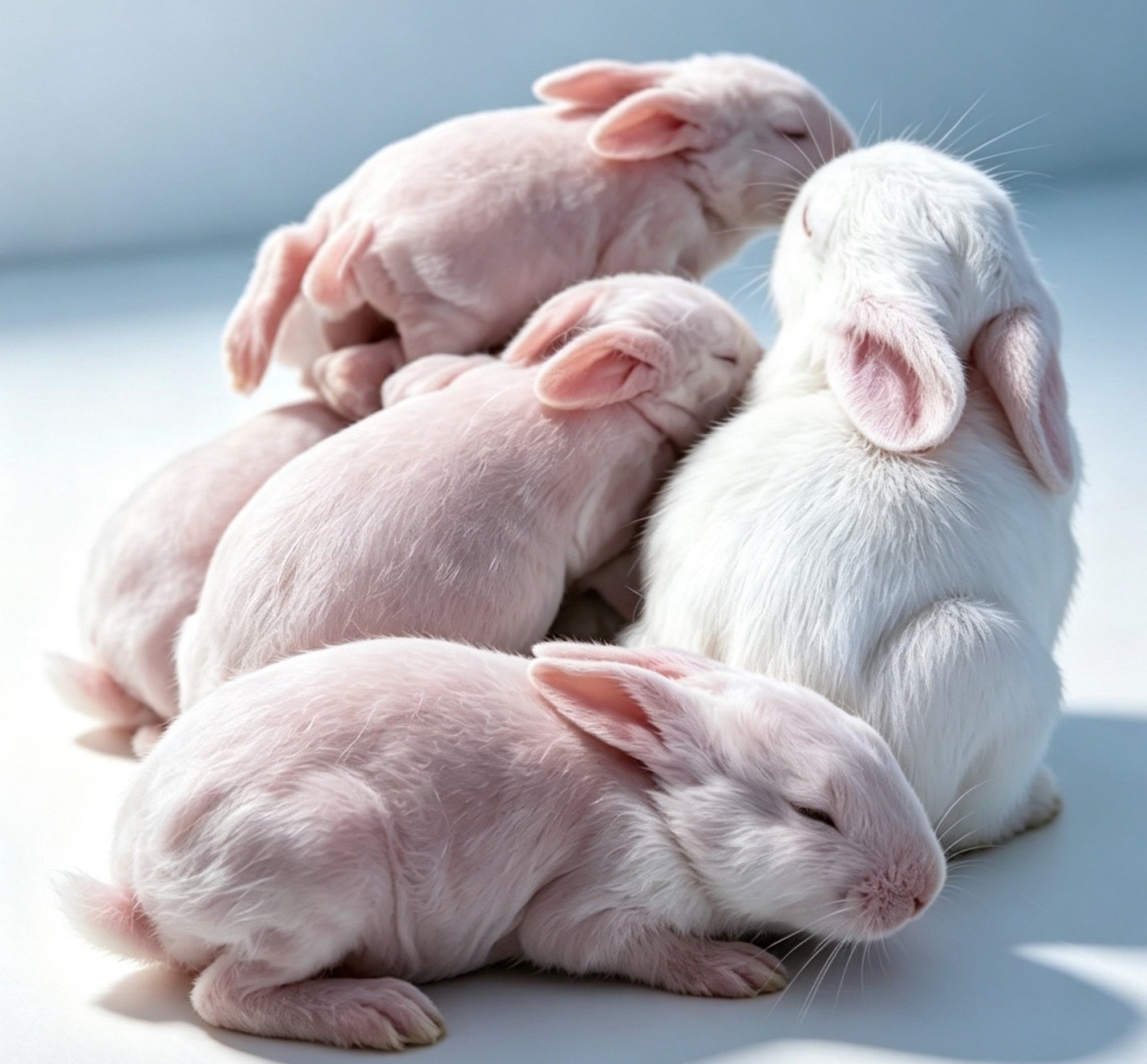
Rabbit Antibodies Broaden Epitope Coverage and Support Discovery Against Challenging Targets
Successful antibody discovery requires more than identifying antigen-binding molecules. Candidates must recognize functional epitopes that support the intended mechanism of action and meet preclinical development requirements. For example, T-cell engagers require epitope positioning that supports productive immune-synapse formation, while antibody–drug conjugates (ADCs) often depend on efficient target-mediated internalization and intracellular trafficking. A candidate’s cross-species reactivity can also influence its preclinical evaluation.
Rabbits mount immune responses and generate antibody repertoires that differ substantially from those of mice. They respond to epitopes that are poorly immunogenic in rodents and highly conserved across species, and rabbit antibodies are often noted for high affinity and specificity. Importantly, rabbit immunization may generate antibodies that recognize conserved epitopes shared by human and mouse proteins. Such cross-reactivity, when experimentally confirmed, can enable certain efficacy studies in wild-type mouse models, potentially reducing the need for target-humanized animals, thereby mitigating the translational risk posed by human–mouse epitope divergence.
These properties may be particularly valuable for complex and challenging targets. Ion channels, transporters, and other multi-transmembrane proteins often have limited extracellular regions accessible to antibody binding and can exhibit high sequence conservation across species. Many neurological targets also belong to these complex membrane-protein families, presenting additional challenges for antibody discovery and functional characterization. Incorporating rabbits into antibody discovery programs may expand the range of sequences and epitopes explored against these targets. Although rabbit antibodies have a long history of application in research and diagnostics, their use in therapeutic antibody development has been more limited. Immunocan’s development of a rabbit model incorporating human Ig gene segments aims to address an important technological gap and establish a new route toward rabbit-based human antibody discovery.
Beyond Mice: Immunocan Validates Key Technology for Humanization in Rabbits, Expanding the Boundaries of Antibody Discovery
Antibody discovery increasingly demands candidates with differentiated binding, functional, and developability profiles. Expanding beyond a single immunization species can broaden the antibody sequences and epitopes available for screening.
Building on its established mouse platform, Immunocan has demonstrated a single-step, Mb-scale in situ replacement strategy at endogenous Ig loci in rabbits. Rather than randomly inserting exogenous DNA, the approach precisely engineers endogenous loci, establishing a technical foundation for a rabbit-derived fully human antibody discovery platform and expanding the company’s cross-species antibody model capabilities.
This advance builds on Immunocan’s established mouse portfolio, including the ImmuMab® platform for fully human antibodies, ImmuMab Light® for fully human common light-chain antibodies, and ImmuMab Heavy® for fully human heavy-chain-only antibodies. The mouse platforms support antibody discovery through conventional hybridoma and phage display technologies, rapid single-B-cell screening—including Beacon and other microfluidic platforms—and NGS- and single-cell-sequencing-based clonal family mining. A typical program can generate hundreds to thousands of target-binding fully human antibody sequences, providing a broad pool for multiparametric evaluation, lead identification, and preclinical candidate (PCC) nomination.
The company has established partnerships with more than 30 pharmaceutical companies worldwide, including multinational corporations. By combining its established mouse platforms with its developing rabbit model, Immunocan aims to broaden the biological diversity available for human antibody discovery and create new opportunities for collaboration with partners seeking differentiated antibody discovery solutions.
Cross-Species Experimental Data May Support AI-Enabled Antibody Discovery
The cross-species strategy also delivers value through data. As AI-driven drug discovery advances, high-quality experimental datasets linking antibody sequences with antigen binding, affinity, and functional activity are becoming increasingly important for developing and validating predictive models. Immunization and screening campaigns across multiple species can generate experimentally annotated datasets that capture antibody sequences, binding characteristics, and functional properties. This data may provide valuable resources for training, evaluating, and refining AI models.
Immunocan’s humanized mouse platforms have generated a dataset containing hundreds of millions of data points. Since rabbits and mice have distinct immune-response characteristics, their antibody repertoires may differ in CDR sequence composition, epitope coverage, and epitope preferences. Combining experimental data from both species may therefore enable AI models to learn from a broader range of sequence–function relationships.
Building on experimental data from its mouse and rabbit platforms, the company is developing an AI-enabled antibody design platform to support candidate screening and optimization. As additional sequence, functional, and structural data become available, the company aims to expand the use of computational methods to areas such as epitope prediction, sequence design, and developability assessment. These capabilities will require iterative training and validation against experimental results. In parallel, Immunocan plans to explore HCO and CLC rabbit models and related multispecific antibody formats, with the goal of expanding discovery options for challenging targets and supporting future AI model development.
Next Steps: Further Characterizing the Rabbit Platform and Its Antibody Discovery Potential
In the next phase, the company will continue to assess the sequence integrity, rearrangement, and expression of the introduced human gene segments, and will confirm germline transmission through subsequent breeding. Following establishment of stable lines and validation of immune function, the company will evaluate the platform’s discovery performance across diverse target classes and integrate it with its existing antibody discovery and engineering platforms.
Spanning mice and rabbits, Immunocan is building a multi-species platform for fully human antibody discovery while continuing to expand into HCO, CLC, and multispecific antibody formats. The data generated across these platforms is expected to support the continued training and refinement of AI models, strengthening the company’s capabilities in AI-enabled antibody discovery. The successful Mb-scale in situ replacement in rabbits marks a major milestone in the company’s cross-species animal engineering program. It establishes a foundation for expanding antibody discovery against complex and challenging targets, including ion channels and central nervous system targets, and creates new opportunities for differentiated antibody development, platform partnerships, and future licensing collaborations.
About Immunocan
Immunocan was founded in 2020 and specializes in using gene editing technology to replace immunoglobulin variable region genes in various animals, resulting in genetically engineered animals capable of producing fully human antibodies and other innovative modalities. The company is committed to offering cutting-edge antibody discovery platforms to worldwide drug research partners, with the goal of developing safer and more effective treatments for human diseases.
For more information, please visit: https://immunocan.com/
For business cooperation, please contact: